I still vividly remember watching Kerstin Casparij score for Manchester City against Everton in April of last year. Not just because of the goal itself, that admittedly, I barely recall, but because during the wake of her celebration, she kissed the small DIY trans flag she had draped around her wrist.
It came just four days after the UK Supreme Court had ruled that “woman” in the Equality Act would henceforth only relate to biological sex. And within weeks, the FA followed suit, announcing that trans women would be banned from all FA-affiliated women’s leagues, with the rule coming into force, rather bleakly, on the first day of Pride. The grassroots players it targeted, women who had been turning up to Sunday matches and midweek training for years on end, were forced to walk away from the clubs, teammates and community they loved.
As someone who works in women’s football and spends a lot of my time arguing that the beautiful game is about far more than what happens during 90 minutes on the pitch, that scene on my TV felt like a rare moment of courage in an increasingly hostile climate for trans people in this country. But after Kerstin’s beautiful statement of solidarity, I couldn’t help but notice how quiet the rest of the English game remained in its aftermath, with the clearest voice in the women’s game belonging to a Dutch defender and the only professional men’s player to speak out being Jackson Irvine, an Australian, while not a single English player that I could find was willing to publicly stand beside them. It left me wondering why English players seem so willing to raise their voices for some causes and so reluctant to go anywhere near others.
“My goal today was dedicated to all my trans siblings, who’ve had an incredibly tough & heartbreaking week. You have all been on my mind and in my heart, you deserve so much more than what this government & society is giving you. I’m so incredibly proud of the trans existence within the queer community, and I’m proud of all trans women – you are women no matter what anyone says.”
— Kerstin Casparij via Instagram
It certainly isn’t because fans are asking them to stay quiet. When we asked our community whether they wanted their favourite players speaking out more on social and political issues, 56% said yes, and when we pushed further and asked whether players should be willing to risk sponsors or selection to do it, that number climbed to 71%. This implies to me that a growing number of fans don’t just tolerate players having opinions, but actively want to see them put something on the line for what they believe in.

Credit: @Kerstin_Casparij
THE UNITED STATES
In the United States, athletics and politics have long gone hand in hand, partly because women’s sport there was born out of a fight for rights. In 1972, Title IX banned sex discrimination in American schools and colleges and over the following 40 years, the number of girls playing high school sport grew tenfold.
That history runs straight through the WNBA, arguably one of the most politically active leagues in the world, and many credit its players with helping to tip the balance of power in the US Senate. In 2020, when Atlanta Dream co-owner and Republican senator Kelly Loeffler attacked the league’s support for Black Lives Matter, players across the league turned up to games in “Vote Warnock” T-shirts to back the man running against her, and then watched him win her seat in a runoff that, alongside another Georgia race, handed control of the Senate to the Democrats. Then, in 2025, they warmed up in shirts reading “Pay Us What You Owe Us”, and only months later signed a deal worth more than $1 billion.
Football (or Soccer, as the Americans would say) had its own fight, too, with the US women’s national team, who, as reigning world champions earning smaller bonuses than a men’s team that had failed to even qualify for the 2018 World Cup, took their own federation to court, and eventually in 2022 walked away with $24 million and a promise of equal pay going forward, World Cup included. At the heart of that fight was Megan Rapinoe, a player who knows better than anyone that speaking out never comes without a cost.

Credit : Julio Aguilar/Getty
A CASE STUDY: MEGAN RAPINOE
When Megan Rapinoe took the knee during the national anthem in 2016 in solidarity with Colin Kaepernick’s protest against police brutality, she was booed by the crowds, and watched as US Soccer introduced a rule forcing its players to stand. A rule it only scrapped, with an apology, four years later.
She went on to co-captain the USWNT, win the World Cup twice and become one of the loudest voices in the fight for equal pay, yet when I searched her name online today and I wasn’t surprised to still be bombarded with some of the worst abuse I’ve ever seen a female player receive. Not just from anonymous trolls too, there are hour-long podcasts dedicated to her supposed “arrogance” and endless perfectly edited clips designed to paint her as a soulless narcissist.
When she tore her Achilles just six minutes into the final game of her career in 2023, a wave of people online celebrated her injury, some with comments so horrific that I had to step away from my laptop for a while. To me, every bit of that hatred comes back to one thing, Megan Rapinoe refused to make herself palatable for easy consumption. Sometimes, to change things, you have to become less digestible to the media and the masses and Rapinoe most definitely paid that price.

Credit: Daniela Porcelli / Getty
THE HISTORY OF ENGLISH FOOTBALL
English women have had their own movements too. In 1971, just weeks after the FA had finally lifted its 50-year ban on women playing on its members’ grounds, a squad of mostly teenage girls flew to Mexico to represent England at an unofficial World Cup, running out in front of 90,000 people at the Azteca, still the biggest crowd an England women’s team has ever played to. Yet when they came home, instead of being celebrated, they were banned for playing in a tournament the authorities hadn’t approved, and their manager, Harry Batt, was barred from football for life. It’s hard not to see a pattern in which American women fought and were rewarded while English women fought and were punished, a lesson I suspect the English game has never quite unlearned. It felt telling that when we asked our followers to name an athlete who had used their platform well, almost 70% of the names they gave us weren’t English, and of the English names, half belonged to men.
 That isn’t to say English players never speak up about sociopolitical issues, because when they do, it does often work. Just three days after winning the Euros in 2022, all 23 Lionesses signed an open letter to Rishi Sunak and Liz Truss, the two candidates running to be prime minister at the time, pointing out that only 63% of schools in England offered girls equal access to football in PE, and although the sports minister, Nigel Huddleston, called it an “admirable goal” while stopping short of a guarantee and reminding everyone that “not everybody is a fan of the sport”, the government pledged equal access seven months later, and today almost 80% of schools offer it.
A year later, on the eve of the 2023 World Cup, the squad went public again, this time with the FA itself, releasing a statement signed by every player expressing their disappointment over unresolved bonuses and commercial payments, though in true English fashion, they politely paused the dispute until after the tournament and quietly settled it a few months later.
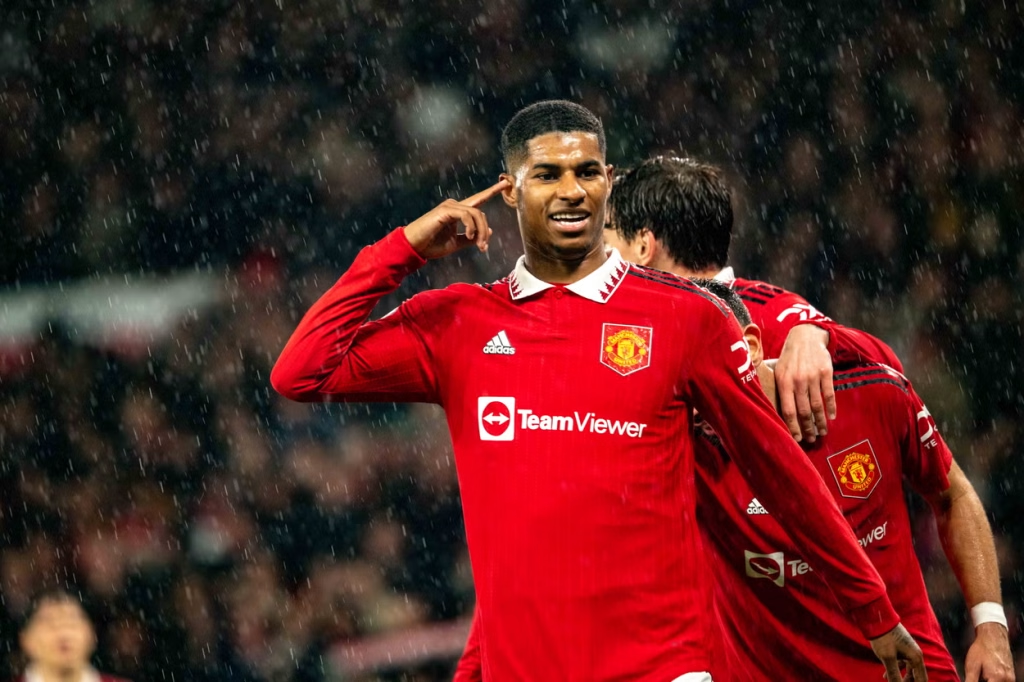
Two years earlier, Marcus Rashford had already shown what an English footballer’s voice could do. With more than a million children in England losing their free school meals the moment the holidays began, Rashford, who had grown up depending on those same meals himself, wrote to the government, helped raise around £20 million with the charity FareShare and gathered more than a million signatures on a petition. It forced the government into not one but two U-turns, and by the end of the year, children who would otherwise have gone hungry were being fed through the summer and winter holidays.
Credit: Getty Images
Neither of those fights was easy, and both changed millions of lives, but they shared something that helped carry them through. At their heart, they were about children, and once the public was behind them, very few people were willing to be seen arguing against feeding hungry kids or letting little girls play. Speaking out carries a very different kind of risk when an issue divides the country rather than uniting it, and when the FA banned trans women from football, the same English voices that had been so loud for schoolgirls were barely heard, leaving it to a Dutch defender with a flag wrapped around her wrist to say what so many others wouldn’t. I think that says something about a culture that has always worn its “keep calm and carry on” mindset like a badge of honour, one that teaches us from a young age not to make a scene, to apologise when someone else bumps into us, and to view anyone who speaks with too much conviction as faintly embarrassing, and even more so if they’re a woman.
Anyone who does refuse to stay quiet tends to discover the cost fairly quickly, as Gary Lineker did in 2023, when the BBC took him off air for tweeting that the government’s new asylum policy was “immeasurably cruel”. It was only when his colleagues walked out in solidarity, leaving viewers with a strangely silent Match of the Day that the BBC reinstated him. A reminder that in England, speaking out on a genuinely political issue can cost you your job, but also that when people stand together, even the most powerful institutions can be forced to blink.
THE NUANCE
Naturally, there will be people reading this who believe footballers should simply stick to football, and there is something fair in the idea that it’s a lot to ask players, many of them still in their early twenties, to carry the weight of every political argument on top of their careers. Not every player wants to be an activist, and silence isn’t necessarily the same as indifference, with many players quietly giving their time to causes far away from the cameras. Speaking out is also, in many ways, a privilege, and it is far easier for a World Cup-winning superstar like Rapinoe to absorb the backlash than it is for a squad player on a short contract who is still fighting for her place.
For female footballers in England, those risks are sharpened by a system that offers them very little protection, from salaries that remain far smaller than the men’s, which makes every sponsorship deal matter that much more, to club social media policies and media training designed to keep everyone neatly on message. Then there is the abuse, which never falls evenly. At Euro 2025, Jess Carter was subjected to so much racism that she stepped back from social media, and the Lionesses decided to stop taking the knee, saying it was clear football needed to find another way to tackle racism. When speaking out can cost you a sponsor, your place in the squad or your peace of mind, it’s not hard to understand why so many players keep their heads down, even when the cause is one they believe in, which is exactly why the burden can’t be left to the players alone.

Credit: Daniela Porcelli/Getty Images
Still, if there is one thing every story in this piece has in common, it’s that change rarely comes from one voice alone. The WNBA’s “Vote Warnock” shirts began as a single player’s idea before spreading across the league, the Lionesses’ letter carried the weight it did because all 23 of them signed it, and Gary Lineker was back on air within days because his colleagues refused to let him stand on his own. In almost every case, it isn’t the first voice that changes things so much as the second, fifth and twentieth, the people who quietly decide they’re happy to be seen agreeing.
Our community at GIRLACTICO has told us, quite clearly, that it wants more from the players it loves, and that it would stand behind them even if speaking out cost them something. Perhaps that’s where change begins, with fans making enough noise that the next player to speak up already knows the crowd is on her side.