There’s a particular kind of whiplash that comes with award season in football. One minute, we’re celebrating, uplifting and platforming some of the best players in the world; the next, we’re reminded of just how far we still have to go.
Off the back of a somewhat euphoric 70th Ballon d’Or ceremony, hosted right here in my city last week, it was a rather harsh crash back down to reality when the 2026 FIFPRO Women’s World 11 shortlist was announced. And, quite frankly, it’s not good enough.
For context, the FIFPRO World 11 is the only global football award decided exclusively by professional footballers. This year’s women’s shortlist was voted for by 6,511 female footballers across 64 countries, with the 26 players receiving the most votes progressing to the shortlist. Performances are assessed between 4 August 2025 and 16 August 2026, with the final eleven announced on 9 November.
2025/26 was an incredible year for women’s football. Cameroon made history, knocking out ten-time WAFCON champions Nigeria before lifting the African title. Malawi reached their first-ever WAFCON final, while Japan lifted the Asian Cup in Australia. Manchester City completed the domestic double, Barcelona claimed their fourth Women’s Champions League title and Gotham FC were crowned NWSL champions. I could go on, but we’d be here all day.
The point is, there has been an enormous amount to celebrate across women’s football. Yet, once again, the recognition doesn’t seem to reflect the breadth of talent on display.
There are three issues I think we need to address here: representation, accessibility and media coverage.
Representation
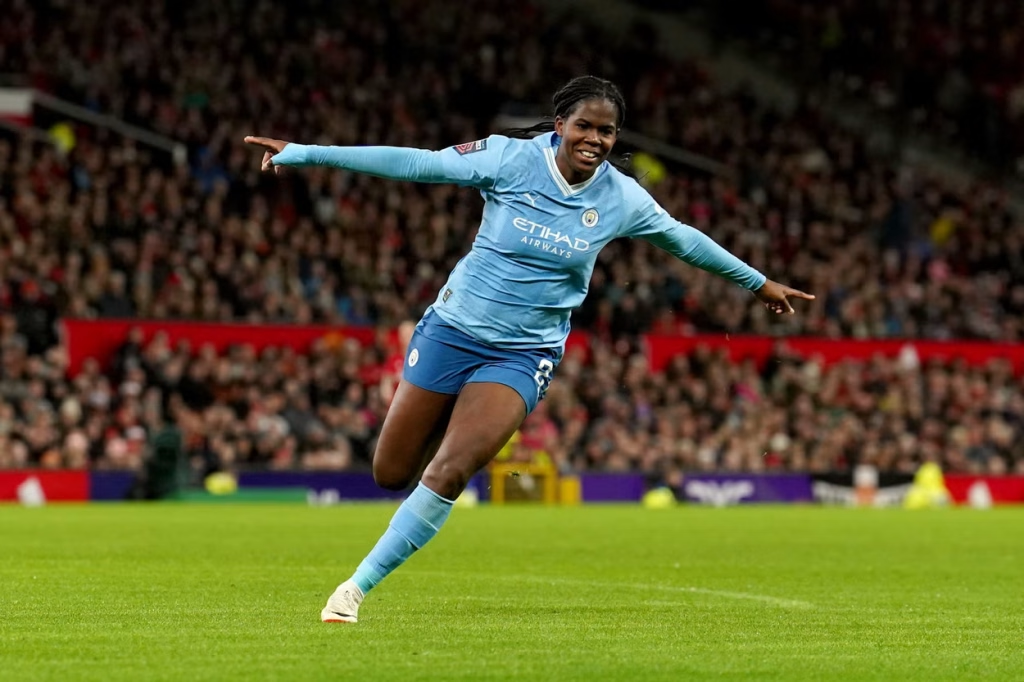
Credit: Martin Rickett/PA
Let’s start with the obvious omission: Bunny Shaw.
The Jamaican striker finished the WSL season as Golden Boot winner for the third consecutive year, helping Manchester City secure both the league title and the FA Cup. Only a week before this shortlist was announced, she also finished third in the Ballon d’Or Féminin rankings. And yet, Bunny doesn’t make the 26.
To be straight to the point, I find that baffling. If somebody asks me who the best forward in the world is right now, my mind goes straight to Bunny Shaw. Without question. It’s an instinct at this point. Watching her week in, week out, scoring against teams – including my own – as I cover my eyes in fear and desperately peep through my fingers every time she gets the ball, I know just how extraordinary she is.
For a player who has dominated English football since she stepped foot in the league, it’s shameful that she isn’t even in the conversation for the World 11. Particularly when you consider that this is an award voted for by her fellow professionals.
Temwa Chawinga, WAFCON and NWSL 2025 Golden Boot winner and tenth in the Ballon d’Or rankings, is another obvious omission. Melchie Dumornay, who finished fourth in the Ballon d’Or, is also missing. Lauren James, Alyssa Thompson and Lily Yohannes are among the other names that could quite easily be part of this conversation.
I could make a list longer than the 26 nominees of Black excellence in this sport, and it still wouldn’t be enough.
There was also an Asian Cup this year, hosted in Australia and won by Japan. Despite this, not one Asian player has made this shortlist.

Credit: Mancity.com
Yui Hasegawa is arguably one of the best midfielders in the world. She helped Manchester City secure a domestic double and lifted the Asian Cup with Japan. Ayaka Yamashita, too, has been integral to City’s success and Japan’s international campaign. These aren’t players operating outside the highest levels of the game. They’re playing for one of the biggest clubs, in one of the most visible women’s leagues in the world. Photo Credit: Manchester City FC
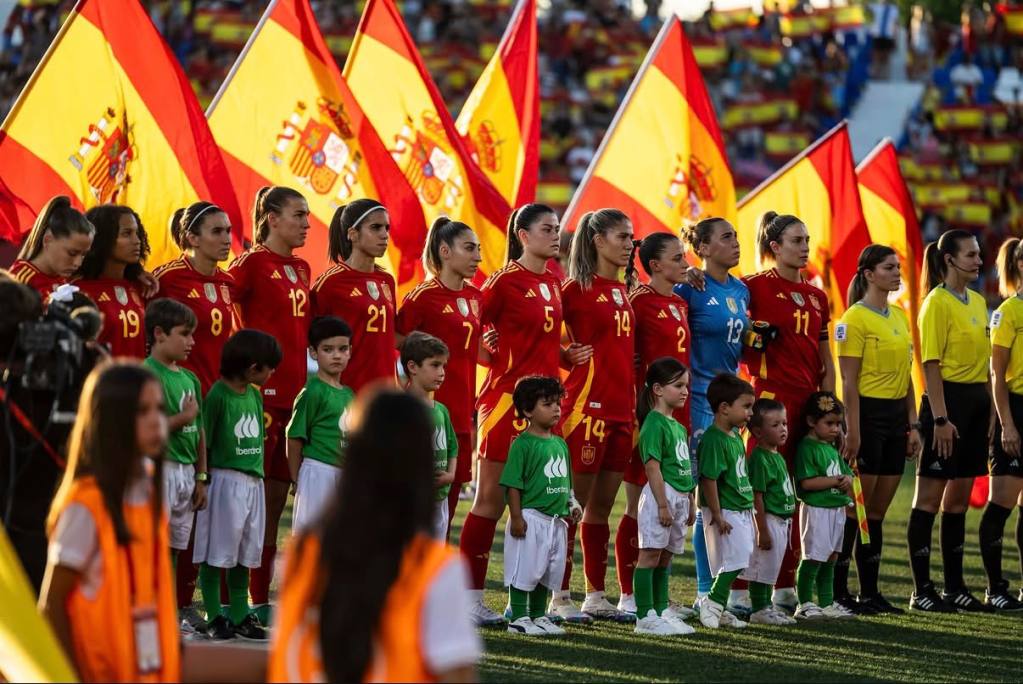
And it isn’t just about individual omissions, but national ones too. Sixteen of the 26 nominees are either Spanish or English. That’s more than half the shortlist coming from just two countries. Of course, both nations have exceptional players, but it does make you question how representative this award really is.
There is a genuine cry for representation of female footballers, but an even greater need to recognise Black, Asian and other underrepresented players who are too often overlooked. And, at some point, we have to be willing to ask whether racial bias plays a part in this.
Not long ago, I wrote about player valuations in the WSL and was taken aback by the difference between Alessia Russo and Bunny Shaw. Both are undoubtedly world-class strikers, yet Russo’s market valuation was around €500,000 higher than Shaw’s. Market valuations aren’t a straightforward measure of ability, but they do tell us something about how players are perceived, promoted and valued within the game.
When White English and European players are consistently more visible and commercially recognised, while Black, Asian and other ethnic minority players have to keep proving themselves despite extraordinary performances, it’s difficult to separate these conversations from the wider issue of racial privilege.
Accessibility and Visibility
Of course, there is another side to this. Professional footballers cannot watch every league, every team and every competition across the world. The accessibility of women’s football is still vastly different depending on where you are.
This is particularly important when we consider that the World 11 is voted for by players across 64 countries. Footballers operate within completely different footballing infrastructures, broadcast environments and media landscapes. Some have access to regular live coverage, analysis and highlights, while others may only encounter international stars during major tournaments or through short clips online.
That isn’t an individual failing of the players voting. It’s a structural issue with the way women’s football is broadcast and distributed. But it does raise a bigger question: how can an award truly represent the world when the opportunity to watch that world is so unequal?
Take Bayern Munich, for example. Their dominance in German football has been remarkable, and players such as Klara Bühl, Franziska Kett and Pernille Harder are more than worthy of recognition. Yet the Frauen-Bundesliga doesn’t receive anything like the same international coverage as the WSL. If a league isn’t regularly broadcast, discussed or promoted, how are players from other countries expected to recognise the talent within it?

Credit: Reinaldo Coddou H./Getty Images
The same can be said of football across Africa and Asia. WAFCON was given the opportunity to light up what would otherwise have been a relatively quiet summer of international football, but the tournament itself was treated with a level of uncertainty difficult to imagine for a major men’s competition. It was postponed just 12 days before its scheduled March kick-off, and UK audiences only received mainstream live broadcast coverage of the knockout stages through Channel 4.
How are we supposed to build a global audience for women’s football when the competitions showcasing its talent are still fighting for consistent visibility?
Nonetheless, I think we have to be careful not to use accessibility as a catch-all excuse. When it comes to certain players, that argument becomes much harder to defend.
The WSL is one of the biggest and most widely covered women’s leagues in the world. Manchester City have just completed a domestic double, with players such as Bunny Shaw, Yui Hasegawa, Ayaka Yamashita and Lauren Hemp contributing to their success. Their performances aren’t difficult to find. If players competing at this level, for one of the most visible clubs in the women’s game, are still being overlooked, we have to look beyond access alone. We have to consider the influence of reputation.
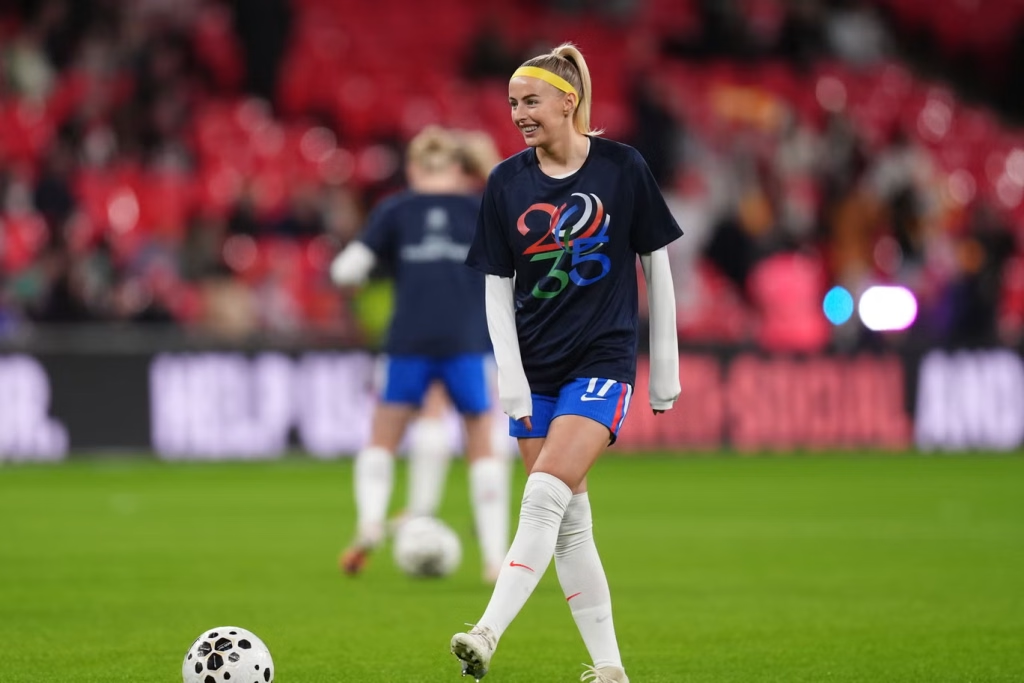
England have seven players on the shortlist, and there is no denying the impact the Lionesses have had on women’s football. Chloe Kelly and Ella Toone, in particular, have become synonymous with some of the defining moments of this generation. They are exceptional players, and I would never want to take away from what they have achieved. But there is a difference between being one of the most recognisable faces in women’s football and having had one of the best seasons in the world.
Credit: John Walton/PA Wire
Aggie Beever-Jones is a talented young forward – one I am genuinely excited to watch progress – but when you compare her output with Bunny Shaw’s, I struggle to understand how one makes the list and the other doesn’t. Beever-Jones scored her first WSL goal in over a year last Sunday, whereas Shaw scored 21 in 22, won the Golden Boot and helped her club to a domestic double.
That isn’t a criticism of Beever-Jones as a footballer – she has every right to celebrate her nomination – but when recognition doesn’t seem to match performances, it’s fair to ask what else is influencing the outcome.
When certain players are already plastered across every form of media, it becomes increasingly difficult for other names to break through. Media coverage has an enormous influence on what we perceive to be the best. The more we see a player, the more familiar their name becomes. The more familiar their name becomes, the more readily we associate them with excellence. When certain leagues, countries and players dominate that coverage, it’s hardly surprising when awards begin to reflect the same narrow picture.
Of course, no shortlist is ever going to please everybody. There will always be difficult decisions and players who narrowly miss out. But when the same countries, clubs and familiar names continue to dominate, while so many world-class players are left out, it stops feeling like a matter of opinion and starts becoming a question of whose football we are actually watching.

Credit: CAF Online
The FIFPRO World 11 is supposed to celebrate the best players in the world, voted for by the players themselves. It should reflect the game in all its diversity: across continents, leagues, cultures and backgrounds. Not just the players who are easiest to watch, the clubs that are easiest to follow or the names we have been conditioned to recognise.
Calling it a World 11 doesn’t automatically make it representative of the world, and until we start giving equal visibility, access and recognition to the women carrying this sport forward in every corner of the globe, we will keep having the same conversation every award season.